 Guaranteed Best Price
Shop with Confidence knowing you've got the best price at a trusted supplier
Guaranteed Best Price
Shop with Confidence knowing you've got the best price at a trusted supplier


ESP32-S3 4inch Display Development Board
Product Description
ESP32-S3-LCD-4 is a microcontroller development board with 2.4GHz WiFi and BLE 5 support, integrates 16MB Flash and 8MB PSRAM. Onboard 4inch 480 × 480 LCD screen can smoothly run GUI programs such as LVGL. Combined with various peripheral interfaces to quickly develop the HMI of ESP32-S3, suitable for scenarios such as smart control panel, home gateway, intelligent interactive panel, industrial control, and smart lighting control.
A powerful and feature-rich platform designed for IoT, embedded display applications, and smart device development. Powered by a 32-bit LX7 dual-core processor, this board delivers high-performance computing while maintaining energy efficiency, making it ideal for both real-time control and graphical interface tasks.
Featuring a vibrant 4-inch 480×480 resolution LCD, it provides crisp visuals for user interfaces, dashboards, and more. The board comes with integrated WiFi and Bluetooth 5.0 capabilities, allowing seamless wireless communication for connected devices and smart applications. With an onboard antenna, compact design, and extensive I/O options, the ESP32-S3 development board simplifies prototyping and deployment. It’s the perfect solution for developers building next-gen smart home devices, portable monitors, industrial controls, or touchscreen IoT interfaces.
This is with Touch Function.

Product Features
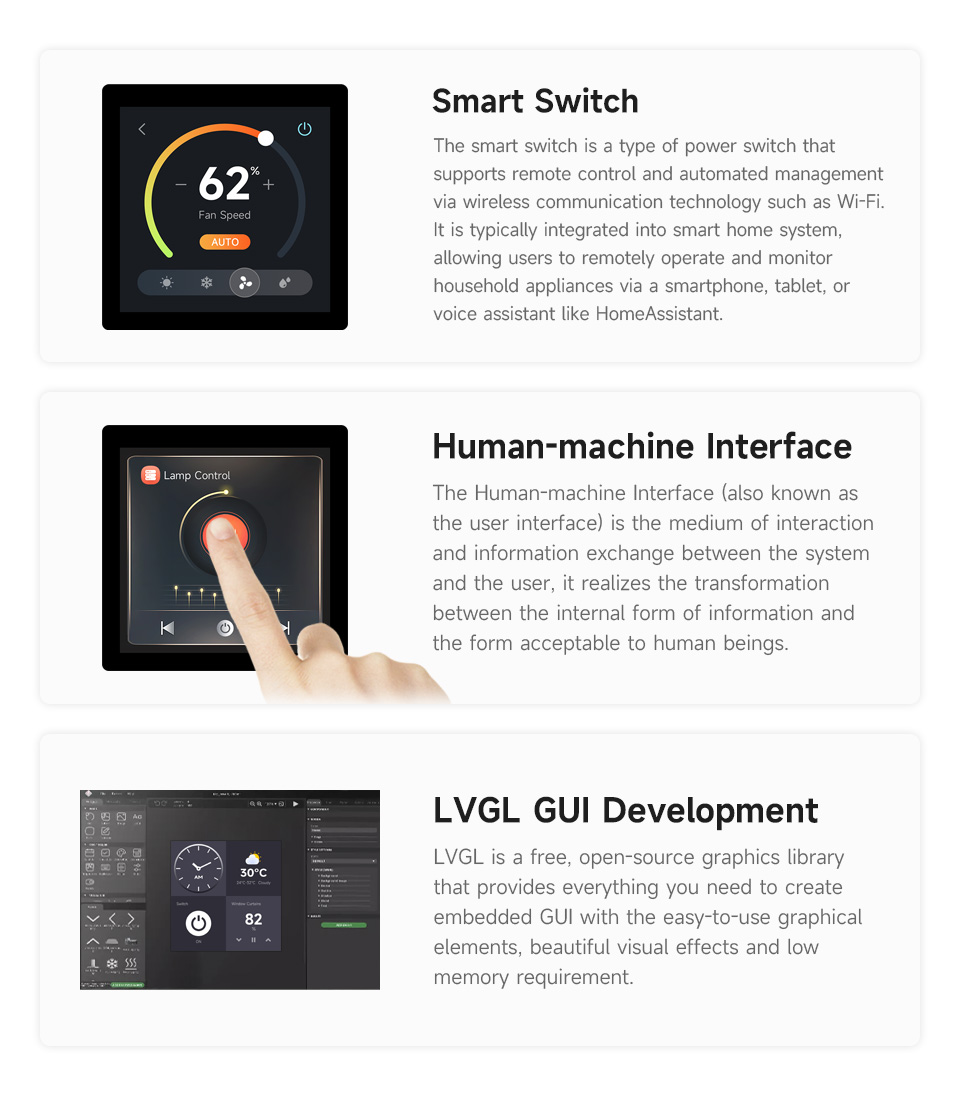

Optional for touch function via I2C interface, supports 5-point touch for flexible operation and smooth multi-point UI interaction
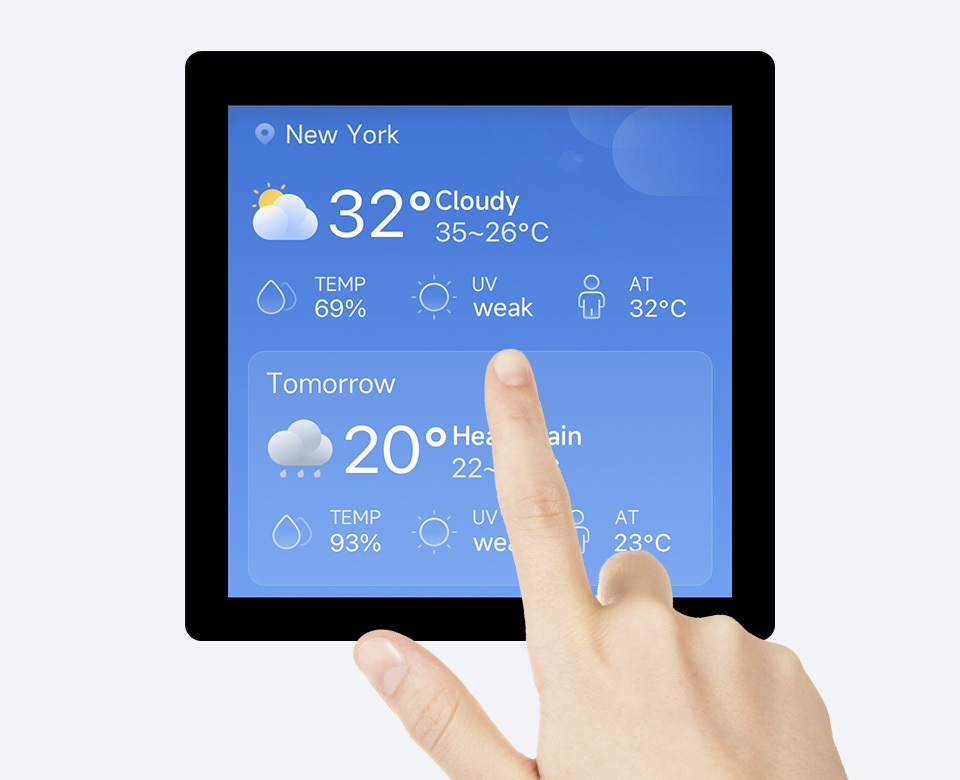
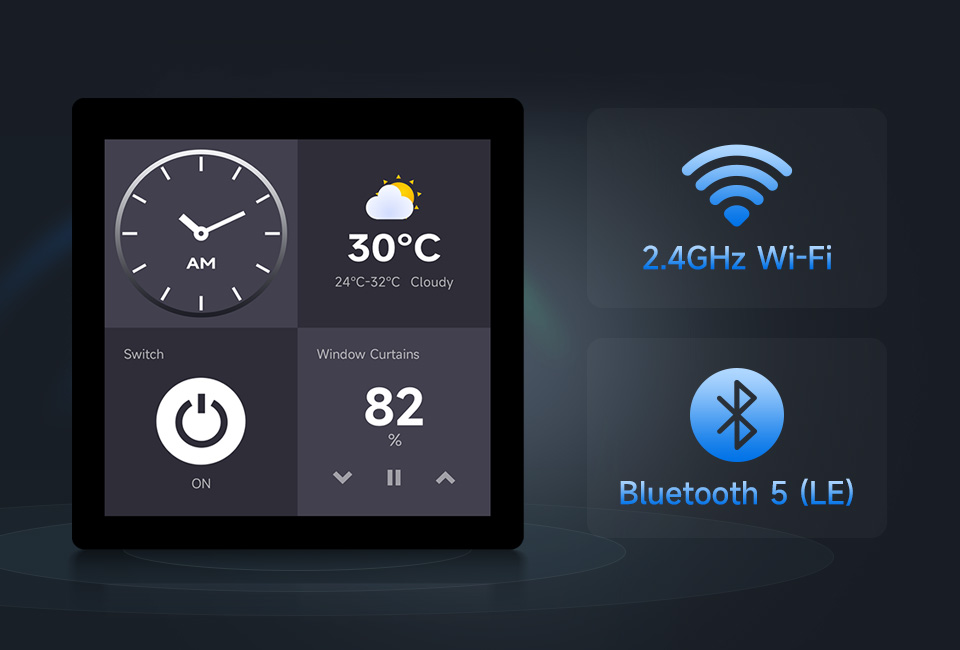
Supports 2.4 GHz Wi-Fi (802.11 B/G/N) and Bluetooth 5 (LE), Onboard Antenna
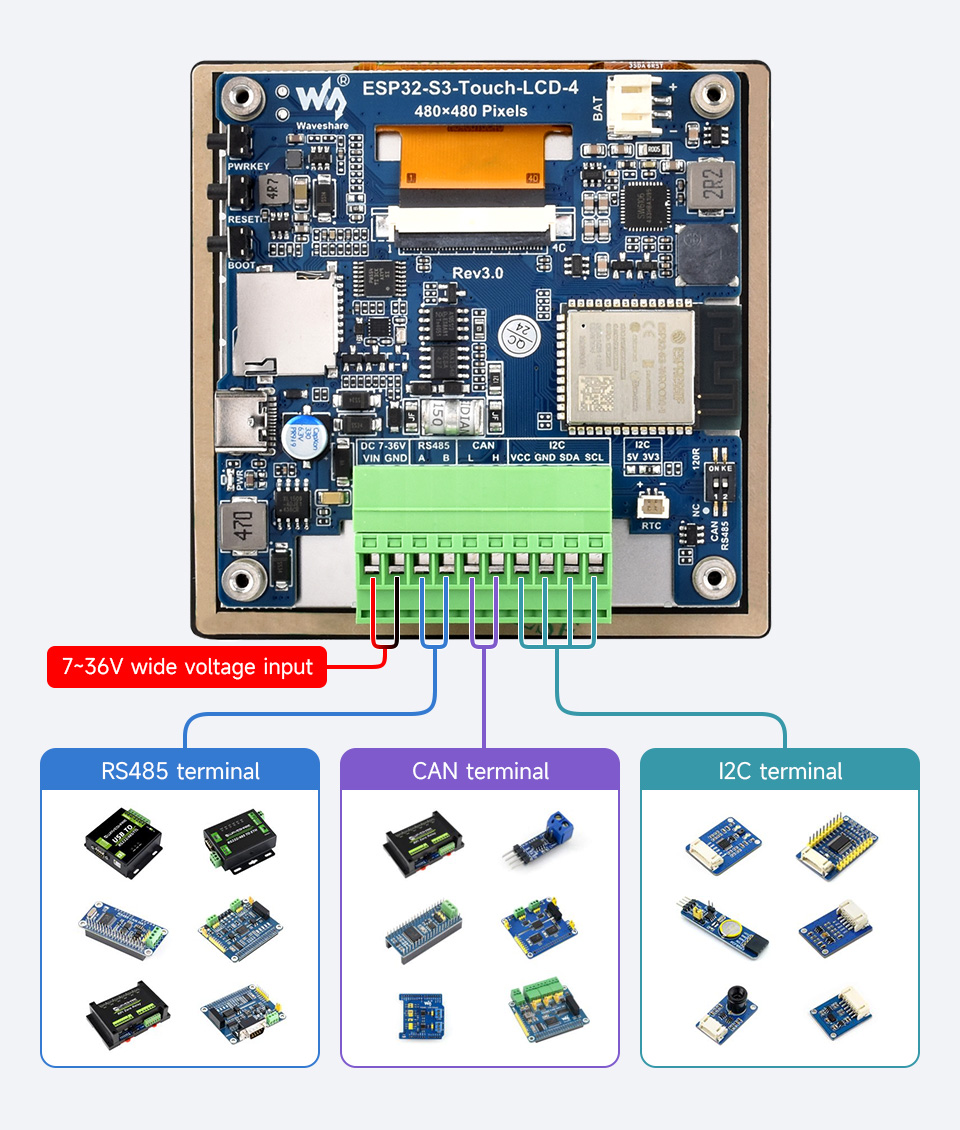
Supports the expansion of multiple peripherals via CAN, RS485, and I2C interfaces


ESP32 Dev Board + SX1278 + 0.96 inch Blue OLED Display
ESP32-S3 2.8inch Display Development Board - 240×320 IPS
ESP32-P4-NANO WiFI6 Development Board - Kit A